Showing posts with label angkor wat. Show all posts

Thursday, January 28, 2016

The Apsaras and Their Pets

If you are traveling to Angkor complex or visiting Khmer temples probably you will notice that in every temple you enter, you will easily witness some beautiful carvings, ornaments, and many figures and figurines to decorate the temple entrance, walls, passages, etc. The most noticeable probably those figure of Apsara, the heavenly dancers or dancer of the God Kingdom in the heaven shown on earth.  In almost in every temple you will find the Apsara, small size, medium or large size, flying Apsaras with many details, styles, shown how it was the dance, with different costumes, hair styles, accessories and beautiful faces. The process to build the temples and to carve these figures probably takes such long period of times. The work is so fine and very details in every carving displayed here.

Talking about the Apsara; mostly in one temple, the style of Apsara perhaps has a bit similarity. The only different probably the cluster display, group of apsara from one lower level of the temple to higher ground like the apsara of the Bakan look prettier than other Apsaras in Angkor Wat.

Their faces are also slightly different from one to the other or group of Apsaras to the other group in the different corner of the temple’s wall; this is probably because of the different individual worker or group of workers who carved these statues that perhaps their faces were copies of the Apsara’s faces or at least applied as self-portrait-carving kind of.

During the pose or dance, the Apsaras dressed extremely beautiful with many accessories from head to toe. As well as every Apsara will carry her own things for purpose or something in her hands like lotus flowers, bouquet of jasmine flowers, flower arrangement on sticks, mirror, combs, offerings, as well as carry animals or something else.

The Apsaras carried animals in her hands, I presumed that those Apsaras has their very own preference animal or their own pet/s. I found few of them carried bird/pigeon, rooster/chicken/bird, fishes, etc.

I am not a scholar neither expert on Angkor but I love Angkor complex which I spent more than eight years in Cambodia in both Siem Reap (more than 6 years) and Phnom Penh (2 years). As I visited and explored the temple as many as 50-60 times, sometime I managed myself to discover something that I never see before in the temple complex. As soon as I start to detail evry corner of the complex as well as the carvings, hidden graffiti, the more I luckily see by my own eyes something new about this magnificent civilization in the ancient era, like this beautiful carving of Apsaras carried their pets.

About the image above:
An Apsara with something (probably animal)
Nokor Bachey temple

Why the Apsara carry animals?
As I found in some temples I have visited, I have seen pigeon/bird, chicken/rooster/bird and fish that attached to the Apsara’s hands. The Apsara like to carry animals probably for some reasons as:

1.     The Apsaras love animals
2.    Probably their pet
3.    Probably for the offerings
4.    It might the Apsara would like to offer special dance related to the animal
5.    Probably that particular animals were the sign of the area
6.    Send a message  as in particular form of the animal
7.    Probably it was preference of the artist that carved the statue
8.    Every animals has its meaning and represent something


Animal symbols related to the Apsara appearance

About the image above:
an Apsara with a bird/pigeon
Nokor Bachey temple
Apsara carries bird/ pigeon: pigeon is amazing creature and probably the oldest domestic bird that recorded in almost every era of civilization. It is show that pigeon is very smart, pure, intelligent, and has very good navigation ability. If you release the pigeon; it will be easily find its way back home. The pigeon has strong connection between itself, the owner and its surroundings. The pigeon is a lovely bird, strength, stubborn and the pigeon as symbol of accomplishments of some important work or tasks. Bird flies high into the sky that show strength, energy-fly away, view from above and bounce back! The dance to attract the unknown spiritual source to bring the blessing back to earth for the people in the Khmer Kingdom!

About the image above;
An Apsara with rooster/chicken/female chicken
Ta Phrom temple
Apsara carries rooster/bird/chicken/female chicken: rooster symbolize abundance blessings today’s life of providence, a thankful gesture to be born, it is positive relation between human and creator. It is between mind and super mind, intellectual and super intellectual, sexuality, fertility, grow and future. It is after the equinox of chicken egg, it is dynamic, balancing and popular as domestic animal very close to human as well as to create harmony. The spirit of the rooster is that usually use instinct to detect the ground to search food and keep it to her chicks. The beauty symbol of the roster is also for motherhood power of keeping relationship harmonious, responsible and productive, and protective. All vibration that Apsara show us when she carried rooster while she socialize and appear in the public.

About the image above:
An Apsara with fish on her left hand
Ta Phrom temple
Apsara carries fish: in this topic of the Apsara carries fish probably more complex compare to few others scenes that I saw in the temple. Fishes related to water, blue water, instinct, depth (probably of knowledge), mysteries and consciousness. The fish is a symbol of birth in the womb of water of deep lake of the Tonle Saap; which probably live many spices of fish alive and nobody have any clue actuality how deep it is and what living creature that live in it. Nobody can see the bottom of the lake, the people of Angkor probably just guess with uncertain answer left behind.

In the east, the fish is a symbol of good luck, happiness, fertility, knowledge and abundance. The Apsara dance with fish in her hand probably is to wish you good luck, give you abundance of energy, knowledge as well as harmony as the fish swim in deep blue water that calm, intelligent, happiness and eternity will merged together in the act of blessing dance ceremony.

In Hinduism the fish is a form of avatar of Vishnu as Matsya, a giant fish with human head skimmed to save the planet earth. While in the Buddhism, fish is one of the eight auspicious symbols as follows: white conch, precious umbrella, banner, golden fish, dhama wheel, drawing, lotus flower and vase of treasure.

In the Khmer philosophy (mostly based on Hinduism and Buddhism), bird, rooster, fish and probably other few animals have their own meanings and symbols toward faith, spiritual and daily life.

Recently I only discovered 2 different Apsaras with their pets around the temple in Angkor complex at Ta Phrom temple as well as 1 or 2 at the Nokor Bachey temple which is 1 of them I am not sure if it is really animal or something else as the figure has very bad condition, but I am pretty sure a lot more need to discover in few other locations in the future. If you found new feature of this kind, please update to get better information.


Tuesday, April 7, 2015

My Spiritual Toning

I would like to share my new toning of my shots in new color bars to tint those images. The two colors will represent my view on photography, my aura, feeling and appreciation to the time, space, speed, distance, thought, and many more.

The two-color tones are:

My Deep orange –reddish Colour Tone
This is to represent that I love heat, sunshine, light the source of life. As well as represent my warmth, friendship, my deep expression of being, It is fun, to adore my success but I still love changes.

It is magical.

It is to balance the life itself; it is my encouragement to do more, to work harder. It is determination of my being, my health. It is to stimulate my happiness, freedom, enjoyment and full of expression.  It is a sexy color. It is playful and full of creativity. It is fast moving, strong character. It is my deep aura of willingness to appreciate unseen, to be part of the seen things.

About the image above: The city on the move
About the image above: an entrance at Banteay Kdei
About the image above: Dancing apsara
About the image above: Dancers to make up themselves
About the image above: Figure of ruin
About the image above: Buddha statue
About the image above: City of Phnom Penh at night
About the image above: Balinese legong dancers
About the image above: False door of Angkor
About the image above: Beautiful carving at Angkor complex
About the image above: A 'gajah-mina' (a elephant-fish) sarcophage
during cremation in Bali

My Deep Blue Colour Tone
If the sky is clear and you will see blue sky. It is very wide space with no limit.  It is deep. It is unthinkable. The color of deep blue sea, it is stable, trust, and relax color of personality, my deep thought of higher ground. Appreciation of words of wisdom, it is my intelligence.

It is a color of faith, meditation, deep meditation, my holy chant prayers, it is believe in truth, and it is life after life.

It is a spiritual color.


About the image above: City on the move

About the image above: an entrance at Banteay Kdei
About the image above: Dancing apsara
About the image above: Dancers to make up themselves
About the image above: Figure of ruin
About the image above: Buddha statue
About the image above: City of Phnom Penh at night

About the image above: Balinese legong dancers
About the image above: False door of Angkor

About the image above: Beautiful carving at Angkor complex

About the image above: A 'gajah-mina' (a elephant-fish) sarcophage
during cremation in Bali


Saturday, October 4, 2014

Vandalism at Angkor Wat


Angkor wat temple that built by King Suryawarman II in the early 12th century as state temple and was dedicated to Vishnu. The temple was carefully planned and built following the Hinduism yantra shape, formulation and calculation on numbers; based on the east-west direction of worshiping method.

About the image above: vandalism at Angkor has started 
since very early years at 1881

About the image above: writing on the statue is not good idea

About the image above: this is on the entrance lion body

About the image above: it is Sobini; look like a name of someone

About the image above: it shows Kuc N-L and something

About image above: it shows VGHIA, Sthok, Da...

About the image above: it is mark of CA 1960

About the image above: GSI or 65

About the image above: it shows NHK or NHEK

About the image above: some writing in local alphabets

About the image above: Exsell

About the image above: PHIEM EM MAI 
and some local writing on the pillar

About the image above: 1932 (what is this)

About the image above: PHA 1988

About the image above: it shows MAO

About the image above: G.Lo with some South Indian writing and K.SELANGOR
(Selangor is one state in Malaysia)

About image above: shows graffiti draw on with charcoal

About the image above: scratches on the wall and some writing

About the image above: M E HPNR

About the image above: shows 1838

About the image above: shows some sketches and writing

About the image above: shows some sketches
and far east asia alphabets 

About the image above: full of writing 
and some pretty new 2014.6.20

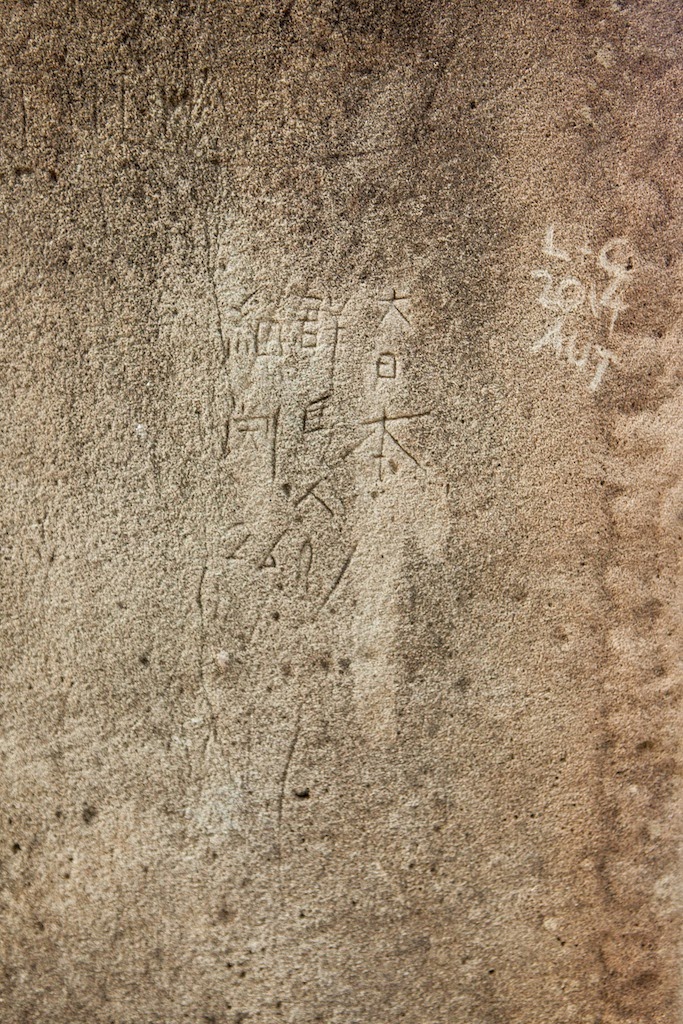
About the image above: some writing in far east alphabet
and L-Q 2014 AUT

About the image above: Polun un mele in g le 1890

About the image above: blue colouring of the artwork

About the image above: deep scratch on the pillar, 
no idea what is this

About the image above: Kwak Jun Seok

About the image above: far east and local alphabet 

About the image above: SID 2001

About the image above: some regional writing..!

About the image above: left hand mark

About the image above: OUM THAN

About the image above: some far east writing 
and KHEM SAKAY

About the image above: VMBN V KHI MT BI and local writing

About the image above: far east writing

About the image above: ngo (vietnamese)

About the image above: graffiti and writing

About the image above: dirty with hand writing

About the image above: local writing 

About the image above: far east writing

About the image above: far east writing

About the image above: scratch near the carving

About the image above: far east writing

About the image above: local writing and graffiti 

About the image above: deep scratch and local writing

About the image above: local writing

About the image above: local writing

About the image above: CLI

About the image above: the writing is not clear

About the image above: blue writing

About the image above: BUN LANC 

About the image above: Semy

About the image above: not sure what is this

About the image above: bullet marks on the pillar

About the image above: bullet marks on the pillars

About the image above: NHIAN THACH O9

About the image above: white color marked on the pillar

About the image above: dirty hands writing

About the image above: dirty hands writing

About the image above: local writing

About the image above: local writing

About the image above: colours 

About the image above: heart shape with local writing

About the image above: PHI LAM

About the image above: large bullet mark on the pillar

About the image aboveL LAYSO

About the image above: graffiti on the pillar

About the image above: red writing

About the image above: dirty wall

About the image above: local writing Reth Keo

About the image above: local writing 'Bopha'

About the image above: wall full of writing

About the image above: SALIN

About the image above: NIEM

About the image above: HAIAU

About the image above: what this people try to say with this 'Run'

About the image above: large red writing

About the image above: Nasib, LOVE, Tea 1001, 2014/7/2
Hebe Love 2012, Mey Herb, Rtf with circle

About the image above: local writing 'Tau' and To

About the image above: Ngoc Du

About the image above: the wall is so dirty with hand writings

About the image above: a pillar full of unnecessary scratches

About the image above: written 'CANADA' 
and in the bottom some local writing 

About the image above: PHAT

About the image above: far east writing on the pillar 

About the image above: another far east writing on the pillar

About the image above: full of far east writing since 1910

About the image above: local writing 'Appippeah' (wedding)

About the image above: GIANG

About the image above: far east writing 

About the image above: MAGNIFIQUE 1895
TERRIER LHE GARAT

About the image above: DB'29 
(probably 1929) with European carving

About the image above: ALIXANDROFF S-XII '16

About the image above: GERINI 31/12/902 (probably 1902 or 2002)
some local writing 'Chheai' (last corner) 7-4-12 and easter writing

About the image above: MAB

About the image above: SJH, SGH, K, BANJONG

About the image above: MAL, ARRI, MATUM, Rama Rani
BUKA, N. GANGSAN, Frathli, Raja Shohri 3-L

About the image above: SUBRA, SANTHEE, MALAYSIA
Vaalga, SINSENG, ELA (who else?)

About the image above: Sothy, MELAKA, UI, 15.6
Thanti, RinMoon, Russ CBCI 2013, Regan, Pream

About the image above: just so many writing..!

About the image above: RIH LOVE LY HENG CHAHHY

About the image above: the writing is not so clear 9dated 20.02.81)

About the image above: eastern writing

About the image above: eastern writing

About the image above: this is probably the most impressive one. 
Has so much time in the temple wrote for his entire family.
Father-Mother name, and all of his siblings. 
And also he wrote that this family is the warrior family

About the image above: red eastern writing


About the image above: writing from 1905

The temple located in the Yasodharapura which today’s Angkor city.  The Angkor Wat meaning City of Temples which is many buildings inside a large complex of outer wall with large pond around.

After the death of King Suryawarman II then king Jayawarma VII was in the throne in the late 13th centuries. He restored the temple and replace some of the statue to large Buddha statue since he change the state religion into Buddhist.  

The end of the Angkor period probably when the Ayutthaya invaders looted Angkor and probably also vandalized the temple.

Visitors of Angkor vandalized the temple
Since the temple has been open for visitors; they started vandalized the temple. To loot the temple by Ayutthaya was the act of vandalism. To scratch, write, or take something from the temple is also consider vandalism.

The word vandal is a behavior that Roman described as destruction or ruthless behaviors to spoil of anything beautiful. Add or take out something that has to be there earlier to support the beauty. 

The motive of vandalism at the temple of Angkor probably varies:
  • Crime: to take part of the Angkor or pocketing something from the temple or destroy some part of the building, statue and art works.
  • Political: loot the temple or destroying the some part of the temple
  • Art: drawing something artistic on the temple wall or statue
  • Remembrance: write name or family, groups, countries, timing, etc.
  • War: Angkor Wat was so vulnerable during the wars either in the ancient war (with other kingdom) or modern war with many bullet marks on the temple wall, pillar and surroundings
  • Religion: changed the state religion was also cause of the change of the original function of the temple. Dismantle the original statues and change with the statue of the recent believes

I hope the visitors of Angkor Wat will have better behaviour and take care the the look of the side. Please do not destroy this amazing temple by doing silly things in the temple. I have been saying many time that the temple of Angkor is one of the most photogenic site in the world. As a visitor we can photograph this temple from every angles and surely your images will turn up amazingly. Angkor Wat Temple is beautiful so please do not vandalise it.